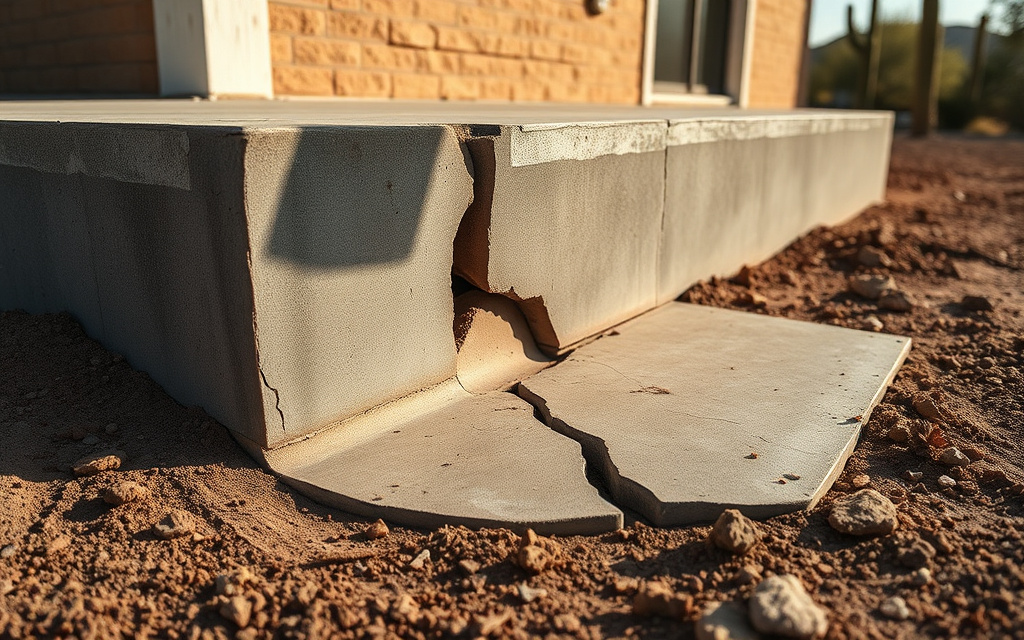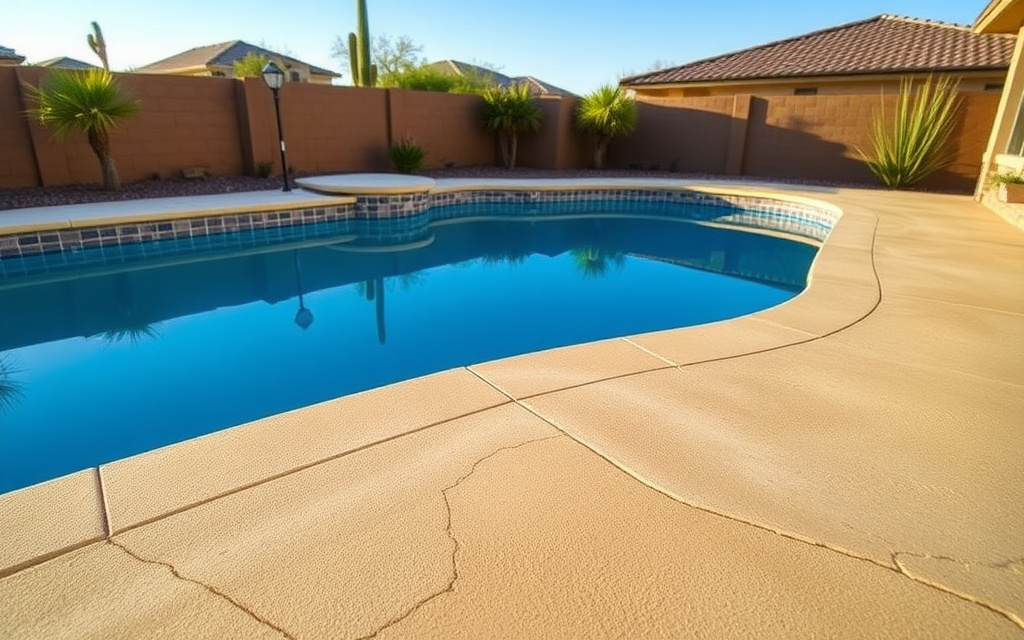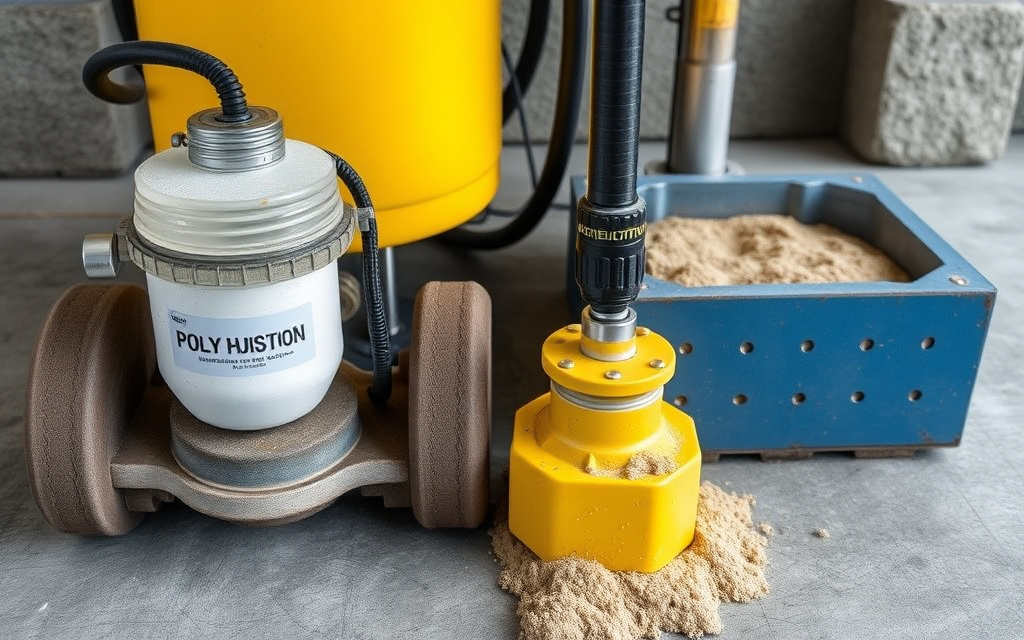
If your driveway, walkway, or pool deck has sunk, you've probably discovered there are two ways to lift it back up: traditional mudjacking and modern polyurethane foam injection. Both raise a settled slab by filling the voids beneath it, but they work very differently — and in Arizona's climate and soils, the difference is significant. Here's an honest, head-to-head comparison.
What Is Mudjacking?
Mudjacking (also called slabjacking or concrete raising) has been around for decades. The contractor drills holes in the sunken slab — typically 1.5 to 2 inches in diameter — and pumps a heavy slurry of cement, sand, and water underneath. The slurry fills the voids and pushes the slab back up. It works, and for a long time it was the only option.
What Is Polyurethane Foam Injection?
Polyurethane foam injection (polyjacking or foam jacking) is the modern method. The contractor drills much smaller ports — about the diameter of a dime — and injects a two-part expanding polymer foam. The foam expands to fill the voids and lift the slab, then cures to a hard, waterproof, permanent state in about 15 minutes. It's the same technology used to stabilize highways and airport runways.
Head-to-Head Comparison
Weight
This is a big one for Arizona. Mudjacking slurry is heavy — often 50+ pounds per cubic foot. Adding that much weight to soil that's already prone to settling can actually contribute to future sinking. Polyurethane foam weighs only a few pounds per cubic foot, lifting the slab without overloading the ground beneath it. Advantage: foam.
Hole size
Mudjacking needs 1.5–2 inch holes; foam needs only dime-sized ports. Smaller holes mean less visible patching and a cleaner finished appearance — important on an upscale property. Advantage: foam.
Water resistance
Mudjacking's cement slurry is not waterproof and can wash out or erode over time, especially with the moisture cycles our monsoon brings. Polyurethane foam is inert and completely waterproof — moisture can't break it down. Advantage: foam.
Cure time
With mudjacking, you typically wait before using the surface. Foam reaches working strength in about 15 minutes, so you can walk on it right away and drive on a leveled driveway the same day. Advantage: foam.
Durability
Because foam doesn't absorb water or erode, it's effectively a permanent fix as long as no major new soil movement occurs. Mudjacking can degrade over time. Advantage: foam.
Precision
Foam injection allows fine, real-time control over the lift, which matters when you need a slab back to exactly level. Advantage: foam.
Cost
Mudjacking is sometimes slightly cheaper per job on paper, which is its main selling point. But when you factor in durability, cleanliness, and the risk of re-settling from the added weight, foam typically delivers better long-term value. Slight edge to mudjacking on upfront price only.
Why Foam Wins in Arizona
The Northeast Valley's expansive clay and caliche soils, combined with intense monsoon moisture cycles, are exactly the conditions where mudjacking's weaknesses show up most — added weight on unstable soil and slurry that can wash out. Polyurethane foam was engineered to solve these problems: light, waterproof, fast-curing, and permanent. For Scottsdale properties, especially premium homes where appearance and durability both matter, foam is the clear choice.
That's why we use polyurethane foam injection exclusively. It delivers cleaner, longer-lasting results with smaller holes, faster cure times, and no risk of overloading the very soil that caused the problem.
What About the Holes and the Finish?
One difference homeowners feel most is the finished appearance. Mudjacking's 1.5–2 inch holes are noticeably larger and harder to disguise, which matters on a visible driveway or a luxury patio. Foam's dime-sized ports patch cleanly with color-matched cement and are barely detectable afterward. On an upscale Scottsdale property — where the whole point is restoring appearance and curb appeal — that cleaner finish is a real advantage, not a minor detail. It's the difference between a repair that blends in and one that announces itself.
The Bottom Line
Mudjacking still exists, and it still works — but modern polyurethane foam beats it on nearly every measure that matters in Arizona: weight, hole size, water resistance, cure time, durability, and precision. The only category where mudjacking sometimes leads is a slightly lower upfront price, and that edge tends to disappear once you account for longevity and appearance.
If your concrete has settled, the method matters. Request a free estimate or call us — we'll assess your slab and show you exactly how foam leveling will restore it, cleanly and for good.