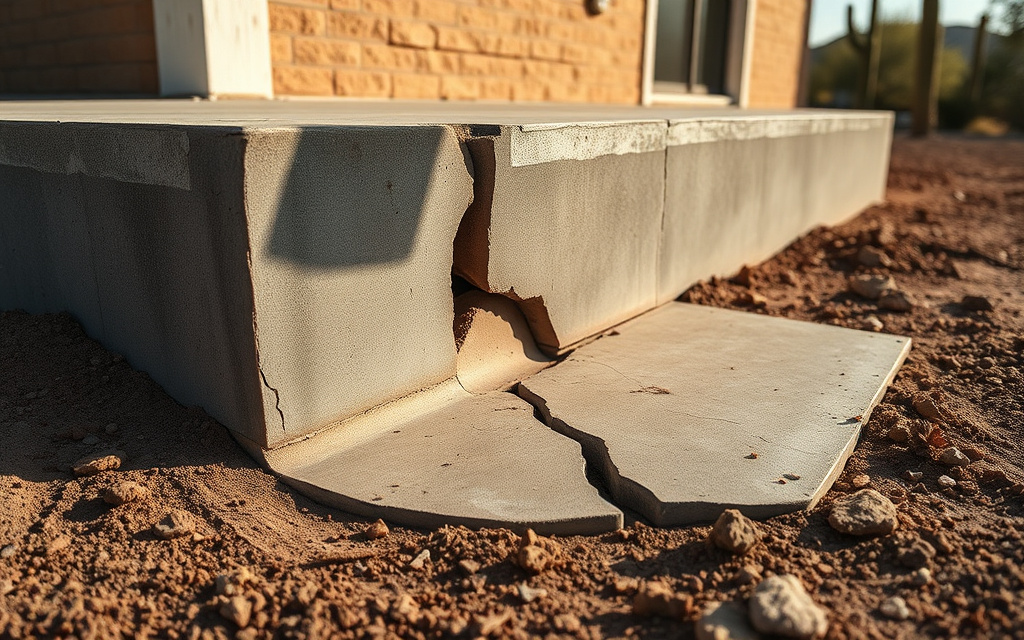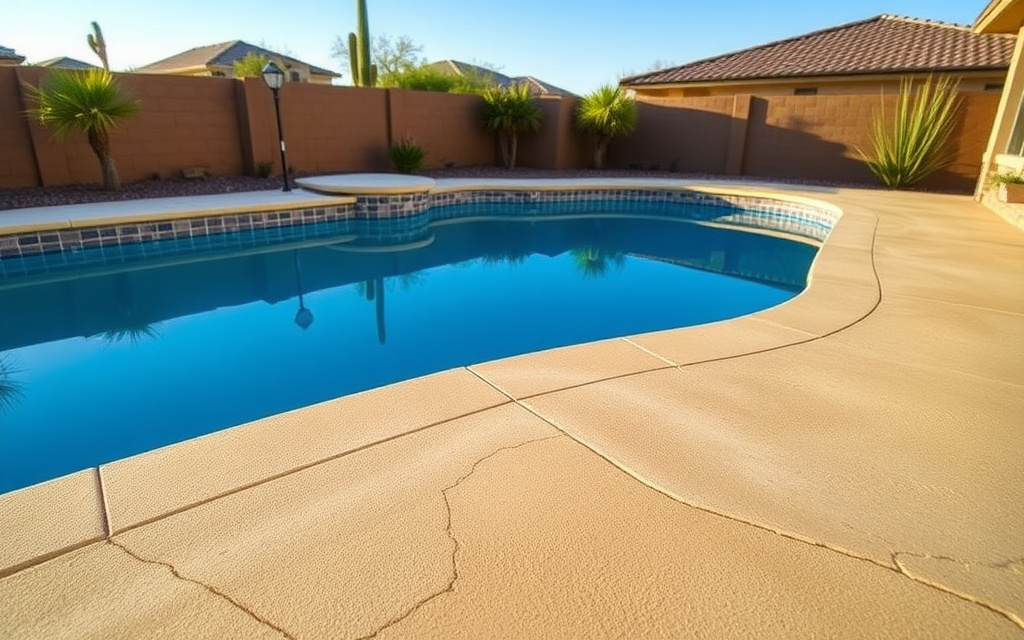
If you own a home in Scottsdale or the Northeast Valley, sooner or later you'll notice it: a driveway that's dropped near the garage, a walkway panel that catches your toe, a pool deck that tilts toward the water, or a patio where the furniture no longer sits level. Concrete settlement is one of the most common exterior problems on Valley properties — and one of the most misunderstood. This guide covers everything you need to know before you spend a dollar: what leveling costs in 2026, how the two main methods compare, why your concrete sank in the first place, and how fixing it protects the value and curb appeal of an upscale home.
A quick note on pricing: every slab and every settlement is different, so treat the figures here as realistic planning ranges rather than a quote. The only accurate number comes from a free on-site assessment.
The Big Idea: Lift It, Don't Replace It
Here's the single most important thing to understand about sunken concrete: in most cases, you don't need to tear it out and pour a new slab. If the concrete itself is structurally sound and has simply settled because the soil beneath it moved, it can be lifted back to level — precisely, cleanly, and for a fraction of what replacement costs.
That matters enormously on a premium Scottsdale property. Replacement means demolition, hauling away debris, forming and pouring, and then days or weeks of curing before you can use the surface. Worse, a fresh slab almost never matches the color and texture of your existing concrete, so even a "successful" replacement can leave your driveway or patio looking patched. Leveling preserves the concrete you already have — same finish, same look — just level again.
2026 Concrete Leveling Costs in Scottsdale
Concrete leveling is generally priced by the size of the area, the amount of lift required, and the volume of material needed to fill the voids beneath the slab. Here's how the common projects tend to fall in the Scottsdale market in 2026.
| Project | Typical Leveling Range | Replacement Comparison |
|---|---|---|
| Walkway / sidewalk section | $400 – $1,200 | Often 2–3x more to replace |
| Driveway (partial / sections) | $900 – $2,500 | Often 2–3x more to replace |
| Full driveway | $1,800 – $4,500+ | Frequently $8,000–$15,000+ to replace |
| Patio / courtyard | $800 – $2,500 | Often 2–3x more to replace |
| Pool deck | $1,500 – $5,000+ | Frequently far more to replace |
| Garage / interior slab | $1,000 – $3,000 | Disruptive and costly to replace |
| Concrete crack repair | $300 – $1,000 | N/A (maintenance) |
Across the board, leveling typically runs 50% to 70% less than tear-out and replacement. Two things drive that gap: you're not paying for demolition, disposal, and new concrete, and you're not paying for the labor-intensive multi-day process replacement requires. For most settled concrete on a Scottsdale property, leveling is simply the better financial decision — and it's done in hours, not weeks.
Factors that move your specific price within these ranges include the total square footage, how much the slab has dropped (more lift means more material), how many separate areas need attention, and access to the site. A firm number comes from a free on-site look.
Polyurethane Foam vs. Mudjacking: The Methods Compared
If you research concrete leveling, you'll run into two methods: traditional mudjacking and modern polyurethane foam injection (often called polyjacking or foam jacking). They accomplish the same goal — raising a sunken slab by filling the voids beneath it — but they're very different in practice, and the difference matters a lot in Arizona.
Mudjacking (the old way)
Mudjacking pumps a heavy slurry of cement, sand, and water through holes drilled in the slab to push it back up. It's been around for decades and it works, but it has real drawbacks:
- It's heavy. The slurry can weigh 50 or more pounds per cubic foot, adding significant load to soil that's already prone to settling — which can contribute to the slab sinking again.
- It needs big holes. Mudjacking requires holes roughly 1.5 to 2 inches in diameter, which are more visible and take more patching.
- It can wash out. The cement slurry is not waterproof and can erode over time, especially with the moisture cycles our monsoon brings.
- It cures slowly. You typically wait before using the surface.
Polyurethane Foam (the modern way)
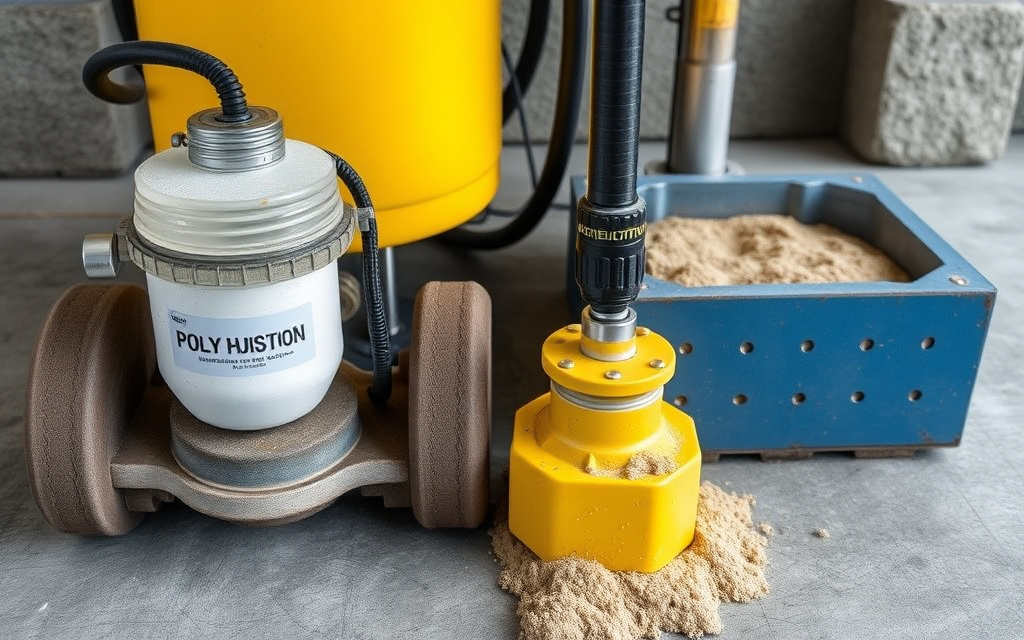
Polyurethane foam injection uses a two-part expanding polymer foam injected through much smaller ports. It's the same technology used to stabilize highways and airport runways, and it's what we use:
- It's light. Cured foam weighs only a few pounds per cubic foot, so it lifts the slab without overloading the already-stressed soil beneath it.
- Tiny holes. Injection ports are only about the diameter of a dime, so they're barely visible and patch cleanly.
- It's waterproof. The foam is inert and unaffected by moisture, so monsoon water and irrigation can't erode it away — a permanent fix.
- It cures in minutes. The foam reaches working strength in roughly 15 minutes, so you can walk on it right away and drive on a leveled driveway the same day.
The verdict for Arizona
For the Northeast Valley's expansive clay and caliche soils and our monsoon moisture cycles, polyurethane foam is the clearly superior method. It's lighter, cleaner, waterproof, faster-curing, and longer-lasting. Mudjacking still exists, but for a premium property where appearance, durability, and minimal disruption all matter, foam wins on every count.
Why Concrete Sinks in Scottsdale
Understanding why your concrete settled helps you fix it for good rather than watching it happen again. In the Northeast Valley, the cause almost always comes down to soil and water.
Expansive clay and caliche
Our region sits on expansive clay soils that swell when wet and shrink when dry, plus caliche — a hard, cement-like layer of calcium carbonate that drains water unevenly. As moisture levels change, these soils move, and the slab resting on them moves too. Over time, that movement leaves voids beneath the concrete that it then sinks into.
Monsoon moisture and drainage
The summer monsoon dumps large volumes of water onto hard, dry ground in a short time. Where drainage is poor — downspouts emptying at the edge of a driveway, grading that directs water toward the house, irrigation over-saturating the soil — that water washes out or compresses the base beneath your slabs. It's why so many homeowners notice a driveway or pool deck has dropped in late summer or early fall.
Poor original compaction
Sometimes the problem started at construction. If the soil beneath a slab wasn't properly compacted before the concrete was poured — common around pools, where the surrounding ground is excavated and backfilled — it settles over the years as it finally consolidates.
The takeaway: sunken concrete is a soil problem as much as a concrete problem. That's why a good leveling contractor doesn't just lift the slab; we identify the drainage and moisture issues that caused the settlement and advise on correcting them, so the fix lasts.
Curb Appeal: Why This Matters More on an Upscale Property
On a modest home, a cracked driveway is an annoyance. On a luxury Scottsdale property, it's a glaring flaw against an otherwise polished exterior — and it's one of the first things guests, neighbors, and prospective buyers notice.
Settled, cracked concrete signals neglect, even when the rest of the home is immaculate. An uneven walkway reads as a trip hazard and a liability. A tilting pool deck undermines the whole backyard oasis. For homeowners who've invested in their property's appearance, and for HOAs responsible for community standards, that visible flaw is worth fixing — and fixing well.
This is exactly where foam leveling shines. Because it preserves your existing concrete and patches discreetly, the repair restores clean, level, safe surfaces without the mismatched-slab look that replacement leaves behind. Your driveway looks like your driveway again — just level. For protecting curb appeal and property value, it's the smart, seamless fix.
Crack Repair vs. Replacement
Cracks deserve their own mention, because homeowners often assume a cracked slab must be replaced. Usually, it doesn't.
- Surface and shrinkage cracks — the fine lines that come from normal curing and thermal stress — can be cleaned, filled with flexible material, and sealed. This stops water from reaching the soil below (where it fuels settlement) and keeps the crack from spreading in the heat.
- Settlement cracks — cracks that appear because the slab is sinking and breaking — are a symptom of a bigger issue. Here, sealing alone won't hold; the right fix is to level the slab and repair the cracks together.
- Structural failure — concrete that's crumbling, spalling badly, or shattered into many pieces — is the one case where replacement genuinely makes sense.
The point is that most cracked concrete is repairable, and only a minority truly needs replacing. An honest assessment tells you which category yours is in.
How the Leveling Process Works
For the curious, here's what actually happens on a typical Scottsdale leveling job:
- Assessment. We inspect the settled slab, identify the voids and the likely cause, and give you a firm price.
- Small ports. We drill dime-sized injection ports in a precise pattern across the sunken area.
- Injection and lift. We inject the expanding polyurethane foam, which fills the voids and raises the slab back to level. We control the lift in real time so it returns exactly where it should.
- Patch and finish. We patch the ports with color-matched cement. Because the foam cures in about 15 minutes, the concrete is ready to use almost immediately.
The whole process for a typical residential job takes a few hours, with no demolition and almost no mess — a stark contrast to the days or weeks a replacement demands.
How Long Does Concrete Leveling Last?
A fair question, especially given the cost. The honest answer: polyurethane foam itself is permanent. Unlike a mudjacking slurry, it doesn't wash away, erode, dissolve, or break down over time, and it's completely unaffected by moisture. Once it's cured beneath your slab, it stays put.
The variable isn't the foam — it's the soil. If new, significant soil movement occurs (a major undetected plumbing leak, a drastic change in drainage, or unusual ground conditions), a slab could theoretically settle again in a different way. That's precisely why we don't stop at lifting the concrete. We look at what caused the original settlement — downspouts, irrigation, grading — and advise on correcting it. Address the water source, and a properly leveled slab stays level for the life of the concrete. Ignoring drainage is the main reason any leveling job, foam or mud, would ever need revisiting.
Pool Decks: A Special Case Worth Highlighting
Pool decks deserve extra attention because they're both especially prone to settling and especially costly to get wrong. The soil around a pool is excavated and backfilled during construction, so it's inherently less compacted than undisturbed ground — and it's then exposed to constant moisture from splash-out, deck washing, and backwash lines. The result is a deck that settles, cracks, and starts tilting toward the pool.
That tilt is more than cosmetic. A sinking deck can stress the coping and bond beam, crack waterline tile, and direct water back toward the pool and house. Leveling the deck relieves that stress and re-establishes proper drainage. And because polyurethane foam is waterproof and inert, it's safe to inject right around the water — with no need to drain the pool. For a luxury Scottsdale backyard, protecting the pool investment beneath the deck is reason enough to address settlement early.
Sealing: The Finishing Touch
One step homeowners often overlook is sealing. After leveling and crack repair, a quality sealer protects the concrete from Arizona's intense UV, monsoon moisture, and staining — the forces that break down unsealed slabs over time. Sealing reduces future cracking, guards against oil and hard-water stains, and gives the slab a clean, uniform appearance. On a premium property, it's the detail that keeps repaired concrete looking sharp for years, and it's a worthwhile finishing step to discuss when you level.
How to Choose a Concrete Leveling Contractor in Scottsdale
A few things separate a contractor who'll deliver lasting, premium results from one who won't:
- They use polyurethane foam, not just mudjacking, and can explain why it's better for Arizona soils.
- They assess the cause, not just the symptom — looking at drainage and moisture, not only the sunken slab.
- They're honest about candidacy, telling you when leveling is right and when a slab genuinely needs replacement instead.
- They respect the property, working cleanly and discreetly with color-matched patching — essential on upscale homes and in HOA communities.
- They provide a firm, written estimate after an on-site look, with no pressure.
The cheapest bid isn't always the best value. A clean, lasting repair that preserves your concrete and protects your curb appeal is worth choosing the right contractor for.
The Bottom Line
For most sunken concrete on a Scottsdale property, leveling — not replacement — is the smart choice. It costs 50–70% less, it's done in hours instead of weeks, it preserves your existing concrete's appearance, and with modern polyurethane foam it's a permanent, waterproof fix engineered for the Northeast Valley's difficult soils. Replacement makes sense only when the concrete has genuinely failed.
One final thought worth keeping in mind: settled concrete rarely improves on its own, and in the Northeast Valley it usually gets worse. The same soil movement and drainage issues that dropped a slab an inch this year keep working on it, and a small, affordable lift today often prevents a larger, costlier one — or the safety incident a growing trip hazard invites — down the road. Acting early is almost always the economical choice, and it protects both your property and the people who use it.
Whether it's a driveway that's dropped, a walkway trip hazard, a settled pool deck, or cracks you want stopped before they spread, the first step is a straight assessment. Request a free on-site estimate or call us — we'll evaluate your concrete, tell you honestly whether leveling is the right call, and give you a firm price with no obligation.